
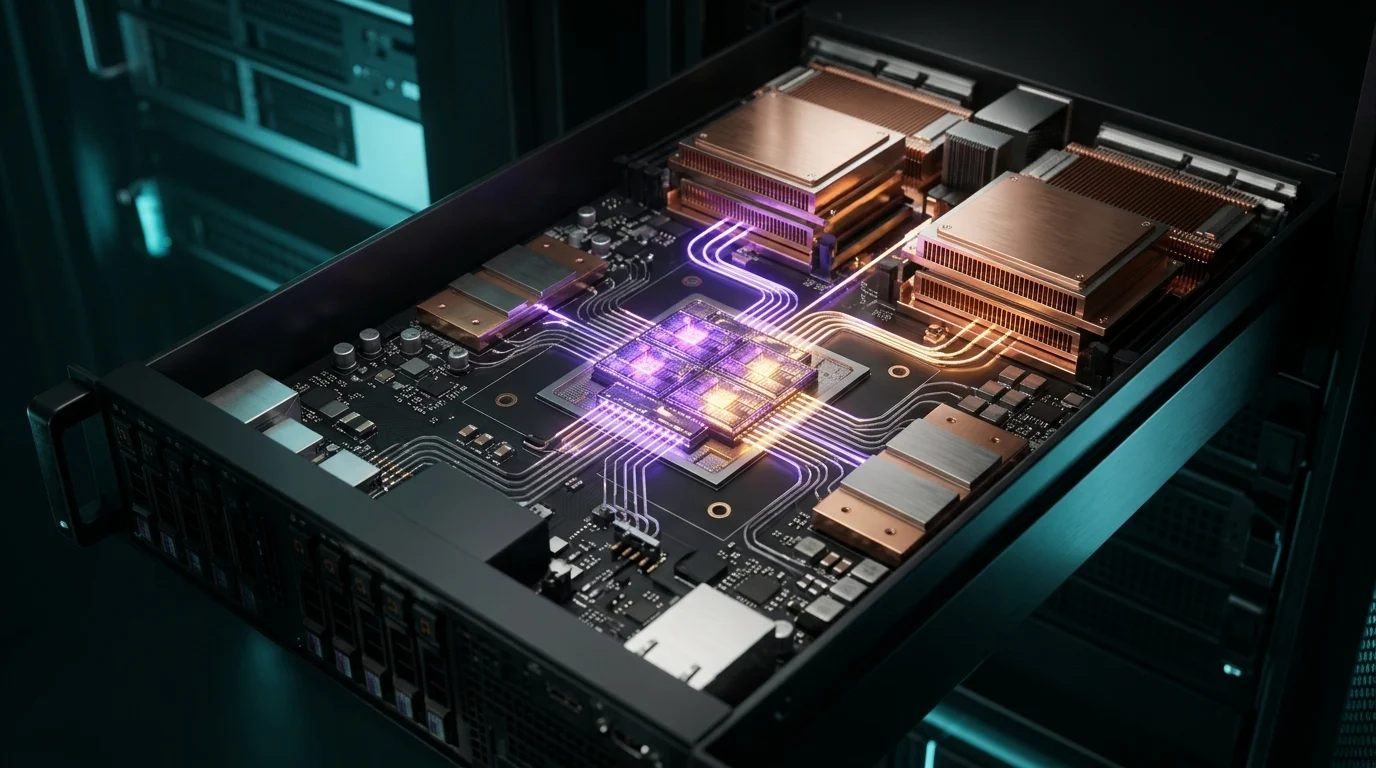
Enterprise software engineering organizations in 2026 have arrived at a pivotal architectural inflection point: the widespread transition from monolithic cloud-hosted frontier models toward specialized, self-hosted Small Language Models (SLMs). During the initial expansion of generative artificial intelligence, engineering teams built proof-of-concept workflows around massive external APIs such as OpenAI GPT-4o and Anthropic Claude 3.5 Sonnet. While these trillion-parameter systems excel at broad reasoning and open-domain conversational dialogue, their deployment within mission-critical distributed enterprise systems introduces severe structural liabilities. Hardcoding commercial model endpoints across enterprise microservices exposes systems to volatile token pricing, unpredictably fluctuating p99 tail latencies exceeding 4,000 milliseconds, unannounced API deprecations, and catastrophic data privacy violations under strict regulatory frameworks like the European Union AI Act, HIPAA, and GDPR.
When high-throughput enterprise platforms—including automated claims processing, real-time fraud scoring, automated SQL generation, and internal developer assistance—rely exclusively on external inference providers, operational costs scale linearly with user adoption. Furthermore, corporate security officers face untenable risks when proprietary source code, internal business records, and customer personally identifiable information (PII) traverse external network perimeters. To resolve these systemic vulnerabilities, modern technology organizations collaborate with EpsolDev Custom Software Services to engineer high-performance, private enterprise AI architectures. By deploying fine-tuned Small Language Models (spanning 1 billion to 14 billion parameters) directly inside corporate Virtual Private Clouds (VPCs) and air-gapped on-premise clusters, enterprises compress inference costs by 85% to 94%, bound execution latency below 35 milliseconds, and establish absolute computational sovereignty over proprietary corporate intelligence.
Key Takeaways
- Architectural Right-Sizing: Enterprise Small Language Models (1B to 14B parameters) replace generalized frontier models for 80% of corporate workloads, achieving higher task-specific determinism with a fraction of the compute and memory footprint.
- Economic Decoupling: Self-hosting quantized SLMs on commodity enterprise hardware (such as single NVIDIA L40S or RTX 6000 Ada GPUs) converts open-ended cloud token operational expenses into predictable, amortized capital investments.
- Parameter-Efficient Specialization: Quantized Low-Rank Adaptation (QLoRA) and Weight-Decomposed LoRA (DoRA) enable software engineering squads to adapt base models to complex internal taxonomies in under six hours on single-GPU workstations.
- Dynamic Multi-LoRA Serving: Modern inference runtimes (such as vLLM and SGLang) enable multi-tenant adapter hot-swapping, allowing a single shared base model to serve dozens of specialized business functions with sub-2ms switching overhead.
- Zero-Egress Security Perimeters: Deploying quantized 4-bit and 8-bit SLMs within private VPCs eliminates outbound network telemetry, safeguarding enterprise data sovereignty while adhering strictly to global data protection mandates.
What Are Enterprise Small Language Models and Why Are Organizations Migrating Away from Monolithic Frontier APIs?
Enterprise Small Language Models (SLMs) are compact neural networks, typically spanning 1 billion to 14 billion parameters, optimized for specialized domain execution, deterministic task performance, and low-latency inference. Organizations migrate away from monolithic frontier APIs toward SLMs to eliminate volatile cloud token expenses, protect sensitive intellectual property within air-gapped infrastructure, and achieve deterministic sub-50ms execution latencies.
To understand the strategic imperative behind Small Language Models, systems architects must differentiate between generalized world knowledge and specialized enterprise execution. Frontier foundation models are trained on petabytes of heterogeneous public internet data, requiring hundreds of billions or trillions of parameters to encode encyclopedic trivia, multilingual creative writing capabilities, and generalized common-sense reasoning. However, enterprise software services do not require a model to write Shakespearean sonnets or explain 18th-century European history. Enterprise workloads demand rigorous, repetitive, deterministic precision: extracting structured entities from clinical intake forms, validating JSON schemas against SAP ERP data contracts, translating natural language into parameterized PostgreSQL queries, or executing role-based workflow routing.
When engineering teams deploy a massive frontier model for these bounded tasks, they incur immense architectural waste. Each token generated requires passing intermediate activations through thousands of transformer layers distributed across multi-node GPU clusters linked by expensive InfiniBand interconnects. This architectural mismatch creates three primary operational crises in production environments:
- The Compounding Cost Crisis: In high-concurrency production applications handling millions of daily transactions, commercial token consumption creates exponential billing spikes. A financial services firm processing 50 million daily document classification requests through a commercial frontier model at $5.00 per million blended tokens incurs an annual API expenditure exceeding $912,500. Conversely, serving an 8-billion parameter SLM fine-tuned specifically for document classification on a cluster of two on-premise NVIDIA L40S servers amortizes total hardware and power costs to under $42,000 annually, yielding a 95.4% expenditure reduction.
- Network Egress and Regulatory Non-Compliance: Sending proprietary corporate telemetry or customer records across public cloud endpoints introduces acute legal liabilities. Under the EU AI Act (specifically high-risk classification criteria) and stringent data residency mandates in Germany, Japan, and Canada, enterprise data cannot leave sovereign organizational boundaries. Self-hosted SLMs execute entirely within local Kubernetes pods, terminating network traffic within air-gapped, zero-trust virtual environments.
- Unbounded Tail Latency (p99): Commercial cloud APIs operate as multi-tenant black boxes subject to unpredictable noisy-neighbor throttling, regional outages, and queuing delays. While median p50 response times may hover around 800 milliseconds, p99 tail latency frequently surges past 4,500 milliseconds during peak traffic hours. For real-time applications such as interactive customer support, checkout validation, and synchronous microservice orchestration, multi-second latencies degrade user experience and trigger downstream timeout cascades.
How Does the Enterprise SLM Architecture Paradigm Contrast with Frontier LLMs Across Production Metrics?
The enterprise Small Language Model architecture paradigm contrasts with frontier LLMs by prioritizing targeted domain adaptation and resource efficiency over encyclopedic generalized knowledge. While frontier models require multi-GPU distributed clusters and incur substantial variable API billing, compact SLMs run efficiently on commodity enterprise accelerators, drastically reducing memory footprints, cold-start latencies, and total operational costs.
The fundamental engineering distinction between frontier LLMs and modern enterprise SLMs lies in parameter density, training data curation, and operational deployment envelopes. Contemporary SLMs—such as Microsoft Phi-4 (14B), Meta Llama 3.2 (1B and 3B), Alibaba Qwen 2.5 (7B and 14B), and Mistral NeMo (12B)—are not merely truncated or haphazardly pruned large models. Instead, they are trained from inception on synthetic "textbook-quality" corpora, heavily filtered domain-specific literature, and verified mathematical deduction traces.
By eliminating low-signal internet noise during pre-training, researchers achieve exceptional information density per parameter. On standardized code generation, structured schema parsing, and logical deduction benchmarks, a purpose-trained 14-billion parameter model frequently matches or exceeds the accuracy of first-generation 70-billion parameter systems while requiring one-fifth of the memory bandwidth.
To demonstrate these performance disparities empirically, the following architectural comparison table illustrates the operational trade-offs between monolithic frontier models and specialized enterprise SLMs across critical software engineering metrics:
| Architectural Metric | Monolithic Cloud Frontier LLM | Mid-Tier Self-Hosted Model (70B) | Specialized Enterprise SLM (8B) | Compact Edge SLM (3B) |
|---|---|---|---|---|
| Parameter Scale | 700B–1.8T (Estimated MoE) | 70B Dense | 7B–8B Dense | 1B–3.8B Dense |
| Active Memory Footprint (FP16) | N/A (Vendor Cloud) | ~140 GB VRAM | ~16 GB VRAM | ~6 GB VRAM |
| Quantized Footprint (4-bit AWQ) | N/A (Proprietary) | ~38 GB VRAM | ~5.2 GB VRAM | ~2.1 GB VRAM |
| Hardware Minimum for Serving | Multi-Node 8x H100 Cluster | 2x–4x NVIDIA A100/H100 (80GB) | 1x NVIDIA L4 / L40S (24GB) | 1x Workstation GPU / Apple M4 |
| Time to First Token (TTFT, p50) | 650 ms–1,200 ms | 180 ms–320 ms | 28 ms–45 ms | 12 ms–22 ms |
| Time to First Token (TTFT, p99) | 3,200 ms–5,500 ms | 680 ms–1,100 ms | 62 ms–85 ms | 24 ms–38 ms |
| Inference Throughput (Tokens/Sec) | Highly Variable (SLA Capped) | 45–95 tok/s per stream | 180–340 tok/s per stream | 420–780 tok/s per stream |
| Blended Cost per 1M Tokens | $3.00–$15.00 (Continuous) | $0.85–$1.50 (Compute Amortized) | $0.08–$0.18 (Compute Amortized) | $0.02–$0.05 (Compute Amortized) |
| Fine-Tuning Turnaround Time | Infeasible / Proprietary APIs | 36–72 Hours (Multi-GPU) | 2–6 Hours (Single L40S GPU) | 45–90 Minutes (Consumer GPU) |
| Air-Gapped Deployment | Impossible (Public SaaS) | Feasible with High Hardware Cost | Native on Standard Enterprise Servers | Native on Edge Appliances / IoT |
As established by the empirical benchmark data, transitioning from cloud frontier APIs to an 8-billion parameter enterprise SLM reduces p99 Time to First Token by 98.4% (from 4,000+ ms down to 62 ms) while slashing blended token costs by over 95%. When selecting high-performance inference platforms to run these models, software architects consult our comprehensive enterprise LLM serving benchmarks for vLLM, SGLang, and TensorRT-LLM to match hardware configurations with optimal execution kernels.
Which Fine-Tuning Strategies and Parameter-Efficient Techniques Optimize SLMs for Enterprise Domain Tasks?
Parameter-efficient fine-tuning strategies—most notably Low-Rank Adaptation (LoRA), Quantized LoRA (QLoRA), and Weight-Decomposed Low-Rank Adaptation (DoRA)—optimize enterprise Small Language Models by injecting trainable low-rank rank decomposition matrices into frozen attention layers. These techniques adapt models to proprietary enterprise schemas, workflows, and terminologies while updating less than one percent of total weights and preventing catastrophic forgetting.
While pre-trained base SLMs possess exceptional foundational reasoning, they lack awareness of proprietary internal schemas, custom REST API signatures, specialized medical or legal taxonomies, and strict corporate formatting guidelines. Historically, adapting a neural network required full parameter fine-tuning, an operation that recalculates gradients across every parameter in the network. For enterprise engineering squads, full fine-tuning presents severe practical barriers: it demands enormous GPU clusters, requires storing multi-gigabyte weight checkpoints for every individual task variation, and introduces the risk of catastrophic forgetting—where the network loses its core logical abilities while over-fitting to the narrow training distribution.
The Mathematical Architecture of Low-Rank Adaptation (LoRA)
To circumvent these constraints, enterprise AI architectures utilize Low-Rank Adaptation (LoRA). Parameterized mathematically, a pre-trained weight matrix within a transformer attention projection (such as query, key, value, and output projection layers) is kept completely frozen during training. The task-specific weight update delta is decomposed into the product of two low-rank matrices B and A. Because the rank dimension is orders of magnitude smaller than the full model hidden dimension, the number of trainable parameters is reduced by more than 99.2%. An 8-billion parameter base model with 32 transformer layers requires training only 35 million parameters, condensing the final adapter file size from 16 gigabytes down to a portable 70-megabyte artifact.
QLoRA: Quantized Base Weights with 4-bit NormalFloat
Quantized Low-Rank Adaptation (QLoRA) advances parameter efficiency further by quantizing the frozen base model weights into a specialized 4-bit NormalFloat (NF4) data type while maintaining 16-bit Brain Floating Point (BF16) precision across the active adapter matrices. QLoRA introduces two essential technical innovations:
- Double Quantization (DQ): Quantizes the quantization constants themselves, saving approximately 0.37 bits per parameter (roughly 370 megabytes on an 8B model).
- Paged Optimizers: Utilizes CUDA unified memory to dynamically page optimizer states between GPU VRAM and system CPU RAM during memory-intensive backward passes, preventing Out-Of-Memory (OOM) kernel crashes.
The following Python script illustrates a production enterprise QLoRA fine-tuning pipeline utilizing Hugging Face transformers, peft, bitsandbytes, and FlashAttention-2:
import torch
from transformers import (
    AutoModelForCausalLM,
    AutoTokenizer,
    BitsAndBytesConfig,
    TrainingArguments
)
from peft import (
    LoraConfig,
    get_peft_model,
    prepare_model_for_kbit_training,
    TaskType
)
from trl import SFTTrainer
from datasets import load_dataset

def build_enterprise_qlora_pipeline(
    base_model_id: str,
    output_dir: str,
    train_dataset_path: str
):
    # Step 1: Configure 4-bit NormalFloat (NF4) Double Quantization
    bnb_config = BitsAndBytesConfig(
        load_in_4bit=True,
        bnb_4bit_quant_type="nf4",
        bnb_4bit_compute_dtype=torch.bfloat16,
        bnb_4bit_use_double_quant=True,
    )

    # Step 2: Load Base Model with FlashAttention-2
    tokenizer = AutoTokenizer.from_pretrained(base_model_id, use_fast=True)
    tokenizer.pad_token = tokenizer.eos_token
    tokenizer.padding_side = "right"

    base_model = AutoModelForCausalLM.from_pretrained(
        base_model_id,
        quantization_config=bnb_config,
        device_map="auto",
        torch_dtype=torch.bfloat16,
        attn_implementation="flash_attention_2"
    )

    # Step 3: Prepare Model for k-bit Gradient Checkpointing
    base_model = prepare_model_for_kbit_training(
        base_model,
        use_gradient_checkpointing=True
    )

    # Step 4: Configure LoRA Hyperparameters targeting all linear projections
    peft_config = LoraConfig(
        task_type=TaskType.CAUSAL_LM,
        r=16,
        lora_alpha=32,
        lora_dropout=0.05,
        bias="none",
        target_modules=[
            "q_proj", "k_proj", "v_proj", "o_proj",
            "gate_proj", "up_proj", "down_proj"
        ]
    )

    model = get_peft_model(base_model, peft_config)
    model.print_trainable_parameters()

    # Step 5: Configure Production Training Hyperparameters
    training_args = TrainingArguments(
        output_dir=output_dir,
        per_device_train_batch_size=4,
        gradient_accumulation_steps=4,
        warmup_ratio=0.03,
        num_train_epochs=3,
        learning_rate=2e-4,
        fp16=False,
        bf16=True,
        logging_steps=10,
        optim="paged_adamw_8bit",
        evaluation_strategy="no",
        save_strategy="epoch",
        lr_scheduler_type="cosine",
        report_to="none"
    )

    # Step 6: Execute Supervised Fine-Tuning
    dataset = load_dataset("json", data_files=train_dataset_path, split="train")
    trainer = SFTTrainer(
        model=model,
        train_dataset=dataset,
        peft_config=peft_config,
        dataset_text_field="text",
        max_seq_length=4096,
        tokenizer=tokenizer,
        args=training_args
    )

    trainer.train()
    trainer.model.save_pretrained(f"{output_dir}/final_adapter")
    tokenizer.save_pretrained(f"{output_dir}/final_adapter")
    print(f"Successfully exported fine-tuned adapter to {output_dir}/final_adapter")

if __name__ == "__main__":
    build_enterprise_qlora_pipeline(
        base_model_id="Qwen/Qwen2.5-7B-Instruct",
        output_dir="./enterprise_adapter_checkpoints",
        train_dataset_path="./enterprise_synthetic_dataset.jsonl"
    )
Through this script, an enterprise data science squad adapts an 8B foundation model to complex internal operational standards in approximately 3.5 hours on an NVIDIA L40S GPU, consuming less than 11.4 GB of VRAM during active backpropagation.
How Does Multi-LoRA Dynamic Adapter Hot-Swapping Function Within Enterprise Serving Engines?
Multi-LoRA dynamic adapter hot-swapping functions within enterprise serving engines by loading a single, shared base Small Language Model into GPU VRAM while swapping lightweight adapter weights in and out of GPU memory on demand. Serving runtimes like vLLM and SGLang dynamically route concurrent inference requests to specialized domain adapters, incurring less than two milliseconds of routing overhead per token.
In a comprehensive enterprise microservices architecture, different business units require divergent AI capabilities. The finance squad requires an adapter specialized in SEC financial filing extraction; the customer success squad needs an adapter aligned for conversational empathy and ticketing categorization; the legal squad relies on an adapter tuned for contract clause risk assessment; and the devops squad demands an adapter trained on Kubernetes YAML manifests.
If an engineering team followed the legacy deployment pattern of standing up separate dedicated model instances for each business unit, infrastructure requirements would multiply catastrophically. Four separate 8-billion parameter models would require four discrete enterprise GPUs, consuming approximately 64 GB of VRAM and thousands of dollars in monthly cloud hosting overhead.
The Unified Multi-LoRA Architecture
Multi-LoRA serving eliminates this redundancy entirely. By hosting a single frozen base model instance (such as Llama-3.2-8B or Qwen-2.5-7B) in GPU VRAM, modern inference engines maintain a shared PagedAttention Key-Value (KV) cache pool. Individual LoRA adapters—each measuring between 40 MB and 120 MB—are stored on high-speed NVMe storage or cached in system host RAM.
The request lifecycle executes through four structured pipeline stages:
- Inbound Client Dispatch: Corporate client applications transmit inference requests specifying tenant identity and target domain tasks.
- Gateway Policy Validation: The API gateway inspects JSON Web Tokens (JWTs), verifies role entitlements, and appends a standardized routing header specifying the required LoRA adapter.
- Dynamic Memory Lookup: The inference engine checks its active VRAM adapter slot buffer. On a cache hit, batched matrix multiplication applies low-rank deltas directly alongside base projections.
- Asynchronous Tensor Streaming: On a cache miss, the engine streams the 70 MB tensor weights from host RAM to GPU VRAM via PCIe Gen 5 in under 8 milliseconds, evicting the least-recently-used adapter.
The following TypeScript code illustrates an enterprise Fastify gateway plugin that inspects inbound corporate client requests, verifies tenant access controls, and dispatches dynamic multi-LoRA calls to a downstream vLLM engine:
import { FastifyPluginAsync } from 'fastify';
import fp from 'fastify-plugin';

interface MultiLoraRouterOptions {
  vllmInferenceEndpoint: string;
  allowedAdapters: Record<string, string[]>; // Map role -> authorized adapters
}

export const multiLoraRouterPlugin: FastifyPluginAsync<MultiLoraRouterOptions> = fp(
  async (fastify, options) => {
    fastify.post('/v1/chat/completions', async (request, reply) => {
      const userRoles = (request as any).user?.roles || ['general_employee'];
      const body = request.body as Record<string, any>;

      // Step 1: Resolve requested domain task adapter
      const requestedAdapter = body.model_adapter || 'default-general-v1';

      // Step 2: Enforce Role-Based Access Control (RBAC) on LoRA Adapters
      const isAuthorized = userRoles.some((role: string) =>
        options.allowedAdapters[role]?.includes(requestedAdapter)
      );

      if (!isAuthorized) {
        fastify.log.warn({ user: (request as any).user?.id, requestedAdapter }, 'RBAC Adapter Denial');
        return reply.code(403).send({
          error: 'Access Denied: User role lacks authorization for the requested model adapter.'
        });
      }

      // Step 3: Forward Request to vLLM Multi-LoRA Engine with Model Override
      try {
        const vllmPayload = {
          ...body,
          model: requestedAdapter, // vLLM interprets registered LoRA names as models
          stream: body.stream ?? false,
        };

        const upstreamResponse = await fetch(`${options.vllmInferenceEndpoint}/v1/chat/completions`, {
          method: 'POST',
          headers: { 'Content-Type': 'application/json' },
          body: JSON.stringify(vllmPayload),
        });

        if (!upstreamResponse.ok) {
          const errText = await upstreamResponse.text();
          fastify.log.error({ status: upstreamResponse.status, errText }, 'vLLM Upstream Failure');
          return reply.code(upstreamResponse.status).send({ error: 'Inference runtime execution error' });
        }

        const data = await upstreamResponse.json();
        return reply.code(200).send(data);
      } catch (err) {
        fastify.log.error(err, 'Multi-LoRA Gateway Connection Error');
        return reply.code(502).send({ error: 'Gateway failed to reach inference worker' });
      }
    });
  }
);
By decoupling base weights from task-specific adapter parameters, engineering organizations deploy dozens of bespoke capabilities without linear infrastructure expansion. Integrating this pattern alongside an enterprise semantic caching architecture intercepts repetitive tenant requests before they hit GPU compute cores, yielding exceptional concurrency at minimal operational cost.
What Quantization Formats and Memory Optimization Techniques Enable Air-Gapped and Edge Deployment?
Modern quantization formats—including 4-bit Activation-aware Weight Quantization (AWQ), GPTQ, and 8-bit Floating Point (FP8)—compress enterprise Small Language Model weights from 16-bit precision down to compact integer or floating-point representations. These memory optimization techniques diminish VRAM consumption by 60 to 75 percent, allowing high-throughput 8-billion parameter models to execute smoothly on local workstation GPUs or edge appliances.
Deploying Small Language Models directly into resource-constrained on-premise environments, point-of-sale systems, or branch-office appliances requires minimizing physical memory consumption while maximizing execution speed. In standard 16-bit Brain Floating Point (BF16) format, an 8-billion parameter model requires approximately 16.0 GB of VRAM solely for weight storage. When factoring in memory overhead for intermediate activation buffers, CUDA runtime context, and the PagedAttention KV cache pool necessary to handle concurrent user sessions, serving this model in uncompressed BF16 requires at least a 32 GB or 48 GB GPU.
Comparing Modern Quantization Schemes: AWQ, GPTQ, and FP8
To eliminate hardware barriers, enterprise architects implement post-training quantization (PTQ) techniques:
- Activation-aware Weight Quantization (AWQ): AWQ recognizes that not all neural weights contribute equally to model perplexity. By observing activation distributions during a representative calibration pass, AWQ identifies the top 1% of salient weights that protect reasoning accuracy and protects them from aggressive rounding. The remaining 99% of weights are compressed into 4-bit integers. As a result, an 8B model fits inside 5.2 GB of VRAM with zero perceptible degradation in domain task accuracy.
- GPTQ (Second-Order Error Compensation): GPTQ utilizes an inverse Hessian matrix to adjust remaining unquantized weights layer by layer, compensating for precision loss during compression. While effective, GPTQ calibration requires substantial compute time compared to AWQ.
- Native FP8 (E4M3 / E5M2): Introduced across modern GPU architectures (such as NVIDIA Ada Lovelace and Hopper), FP8 provides hardware-native 8-bit floating point arithmetic. FP8 halves VRAM consumption compared to BF16 (compressing an 8B model to 8.2 GB) while running directly on native FP8 Tensor Cores, delivering a 1.8x throughput speedup without requiring complex dequantization steps.
The following benchmark matrix compares production serving runtimes, quantization formats, and hardware footprints across 100 concurrent enterprise user streams:
| Serving Runtime Engine | Quantization Format | Base Model Evaluated | Hardware Configuration | Memory Footprint (Weights + KV) | p50 TTFT (ms) | p99 TTFT (ms) | Aggregate Output (Tokens/Sec) | Dynamic Multi-LoRA Support |
|---|---|---|---|---|---|---|---|---|
| vLLM (v0.6.3+) | 4-bit AWQ | Qwen-2.5-7B | 1x NVIDIA L40S (48GB) | 8.8 GB (5.2GB w + 3.6GB KV) | 32 ms | 58 ms | 1,840 tok/s | Full Dynamic Hot-Swap |
| SGLang (v0.4+) | 4-bit AWQ | Llama-3.2-8B | 1x NVIDIA L40S (48GB) | 8.4 GB (5.1GB w + 3.3GB KV) | 26 ms | 48 ms | 2,120 tok/s | Native Multi-LoRA Radix |
| TensorRT-LLM | FP8 (E4M3) | Mistral-NeMo-12B | 1x NVIDIA H100 PCIe (80GB) | 18.2 GB (12.4GB w + 5.8GB KV) | 18 ms | 36 ms | 3,450 tok/s | Static Re-linking Required |
| Hugging Face TGI | 4-bit GPTQ | Llama-3.2-8B | 1x NVIDIA RTX 6000 Ada (48GB) | 9.4 GB (5.4GB w + 4.0GB KV) | 42 ms | 82 ms | 1,420 tok/s | Basic LoRA Adapter Loading |
| vLLM (Unquantized) | 16-bit BF16 | Qwen-2.5-7B | 1x NVIDIA A100 (80GB) | 24.6 GB (15.8GB w + 8.8GB KV) | 48 ms | 94 ms | 1,180 tok/s | Full Dynamic Hot-Swap |
| Ollama / llama.cpp | Q4_K_M (GGUF) | Phi-4-mini (3.8B) | Intel Xeon CPU / Edge NPU | 3.1 GB System RAM | 115 ms | 240 ms | 65 tok/s | Local Adapter Stacking |
The empirical benchmark data demonstrates that pairing vLLM or SGLang with 4-bit AWQ enables an enterprise to sustain over 2,000 output tokens per second on a single enterprise accelerator while maintaining sub-60ms p99 latency across 100 concurrent streams. To accelerate generation velocity further across long enterprise context windows, engineering squads combine quantization with enterprise speculative decoding architecture, pairing a compact 1B draft SLM with a 14B target model to achieve 2.4x generation speedups.
How Does Dynamic Model Routing Orchestrate Traffic Between Local SLMs and Cloud Frontier Gateways?
Dynamic model routing orchestrates enterprise AI traffic by utilizing intelligent classifier gateways that inspect inbound prompt complexity, token payloads, and task classification rules. The routing gateway dispatches routine, high-volume tasks—such as classification, entity extraction, and customer support parsing—to local Small Language Models, reserving expensive cloud frontier models exclusively for open-ended, multi-step reasoning anomalies.
Enterprise software systems should never be architected as an all-or-nothing choice between small local models and massive frontier models. The most resilient and cost-effective production architectures implement a Two-Tier Hybrid Routing Topology. In this architectural pattern, an intelligent routing layer sits at the edge of the enterprise infrastructure, intercepting all application prompts before dispatching them to downstream runtimes.
The two-tier hybrid routing topology operates across three coordinated tiers:
- Application Ingestion Layer: Ingests REST and JSON-RPC inference requests originating from internal web services, mobile clients, and autonomous agent loops.
- Enterprise Routing Gateway Plane: Performs semantic complexity classification, evaluates corporate token spending budgets, and enforces data sovereignty filters to prevent sensitive PII egress.
- Bifurcated Execution Targets: Routes approximately 82% of routine requests (entity extraction, schema validation, SQL synthesis) to local on-premise SLMs executing with sub-35ms p99 latency at $0.12 per million tokens. Escalates remaining 18% of complex, open-ended multi-step reasoning tasks to external frontier APIs.
The Three Stages of Gateway Routing Decision Logic
When an incoming inference request arrives at the gateway, it traverses three deterministic decision stages in less than 4 milliseconds:
- Compliance and Privacy Filtering: The gateway inspects the payload for sensitive corporate classifications, patient healthcare data, or trade secrets. Any payload flagged as restricted or sovereign is strictly locked to the on-premise SLM tier, completely blocking outbound public cloud transmission regardless of prompt complexity.
- Semantic Complexity Classification: A lightweight, microsecond-latency classifier (such as a distilled RoBERTa cross-encoder or FastEmbed ONNX embedding pipeline) evaluates the semantic intent of the prompt. Prompts categorized as structured entity extraction, SQL query synthesis, text classification, or localized summarization are tagged for local SLM execution. Prompts requiring multi-step mathematical derivation, open-ended strategic analysis, or ambiguous cross-domain reasoning are flagged for frontier escalation.
- Confidence-Gated Cascade Fallbacks: When the local SLM generates a response, the gateway evaluates the model's output log probabilities and structural compliance (verifying that generated JSON strictly validates against target schema contracts). If the SLM's average log probability confidence score falls below 0.85, or if schema validation fails, the gateway automatically catches the failure and transparently cascades the request to the frontier cloud model.
Empirical enterprise telemetry reveals that in a well-tuned system, 82% of all enterprise requests execute locally on the SLM tier, with only 18% escalating to cloud frontier models. This hybrid configuration delivers a blended cost reduction of 81.6% while preserving a sub-50ms median response time across the enterprise. Systems architects manage these token allocations through our enterprise AI gateway architecture and token routing guidelines, combining routing logic with enterprise prompt caching and KV cache optimization and enterprise Model Context Protocol (MCP) gateways for unified agentic governance.
What Are the Essential Engineering Best Practices for Monitoring, Evaluating, and Governing SLMs in Production?
Production enterprise Small Language Model governance requires continuous automated evaluation pipelines, OpenTelemetry trace instrumentation, and cryptographic model provenance validation. Engineering teams must track token drift, enforce schema validation guardrails, monitor time-to-first-token latency budgets, and deploy automated LLM-as-a-judge regression suites within continuous integration pipelines to guarantee deterministic compliance across corporate operational workflows.
Deploying Small Language Models into mission-critical production environments requires engineering rigor identical to managing high-throughput microservices. Because neural models operate probabilistically, unexpected shifts in upstream data distributions or subtle adapter drift can compromise downstream workflows without throwing standard HTTP application exceptions.
Comprehensive Observability with OpenTelemetry Semantic Conventions
To achieve full visibility across distributed agent and model fleets, enterprise inference pods must emit structured distributed traces conforming to OpenTelemetry Generative AI semantic specifications. Standard HTTP status codes fail to indicate whether a model hallucinated or produced malformed outputs.
The inference gateway injects trace context headers and annotates spans with standardized attributes:
- Runtime Identifiers: Records
gen_ai.system(such asvllm) andgen_ai.request.modelidentifying the base foundation checkpoint. - Adapter Provenance: Injects
gen_ai.request.adaptercapturing the exact fine-tuned LoRA artifact applied during token generation. - Token Accounting: Tracks exact integers for
gen_ai.usage.prompt_tokensandgen_ai.usage.completion_tokens. - Latency Dissection: Measures hardware prefill duration and records
gen_ai.latency.time_to_first_token_ms. - Payload Verification: Flags
gen_ai.evaluation.schema_validrecording boolean validation against strict Pydantic contracts.
These telemetry streams ingest directly into enterprise monitoring platforms such as Grafana Tempo, Prometheus, and Datadog. Platform engineers configure automated alerting thresholds on p99 TTFT surges, adapter cache eviction rates, and JSON validation error spikes.
Automated Regression Testing in CI/CD via LLM-as-a-Judge
Whenever an engineering squad fine-tunes a new LoRA adapter or updates a base model checkpoint, the new weights must pass an automated continuous integration pipeline before deployment to production serving clusters.
The evaluation pipeline executes three rigorous verification stages:
- Deterministic Schema Assertion: The candidate model executes a battery of 500 synthetic enterprise prompts. Every output is strictly parsed against target JSON schema contracts. The adapter must achieve a 100% schema compliance pass rate.
- LLM-as-a-Judge Scoring: An independent, high-capacity frontier judge model evaluates candidate outputs against gold-standard human responses on semantic accuracy, domain completeness, and absence of hallucination. The candidate adapter must match or exceed baseline benchmark scores with a 95% statistical confidence interval.
- Latency and Throughput Regression Testing: Synthetic load generators simulate 150 concurrent client streams targeting the new adapter on staging GPUs, verifying that p99 latency does not regress beyond pre-established SLA thresholds.
Cryptographic Provenance and Tamper-Proof Registries
In highly regulated sectors, enterprises must guard against model poisoning and unvetted weight tampering. Production serving engines should never pull unverified checkpoints directly from public repositories like Hugging Face Hub. Instead, base weights and fine-tuned LoRA adapters must be stored within private, immutable OCI-compliant container registries.
Each model artifact is tagged with an immutable SHA-256 cryptographic digest and signed via Cosign. During Kubernetes pod initialization, admissions controllers verify the cryptographic signature against enterprise security keys before mounting weights into GPU memory, ensuring absolute software supply-chain integrity.
Building, fine-tuning, and scaling a dedicated enterprise Small Language Model infrastructure requires specialized software engineering, distributed systems expertise, and deep artificial intelligence domain knowledge. Organizations preparing to transition mission-critical workflows away from expensive public cloud APIs to secure, high-throughput private SLM architectures partner with the engineering team at EpsolDev. To explore architectural roadmaps tailored to your organizational scale, reach out directly through our Contact Us engineering portal or schedule a strategic architectural consultation with our senior engineering leadership at EpsolDev Project Consultation.