
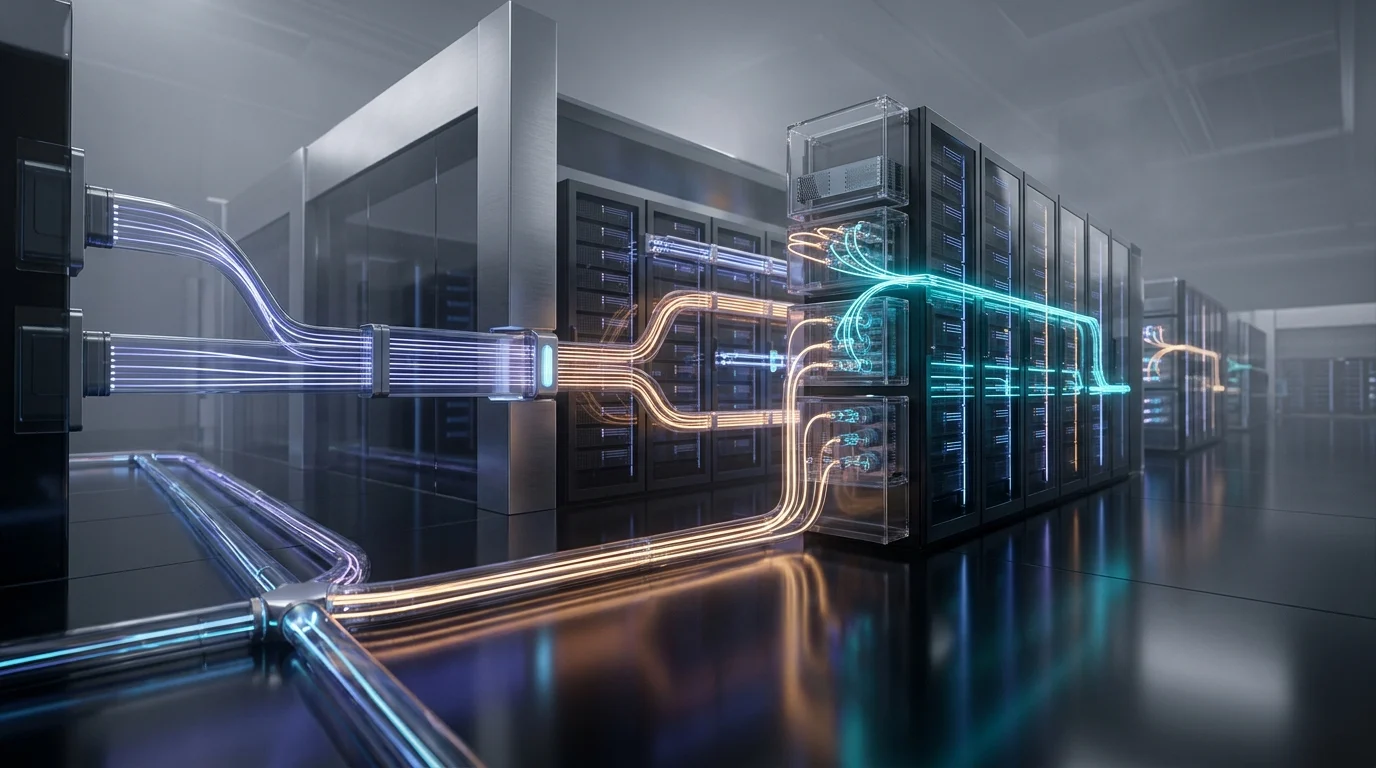
The enterprise software engineering landscape in 2026 has witnessed a fundamental architectural migration away from tightly coupled synchronous REST microservices toward distributed, event-driven architectures (EDA). As modern enterprise platforms scale to handle hundreds of thousands of concurrent requests across global cloud regions, synchronous HTTP call chains introduce cascading failure risks, high p99 latency spikes, and operational bottlenecks. By combining Apache Kafka's fault-tolerant distributed event log with n8n's enterprise workflow orchestration and Model Context Protocol (MCP) agentic reasoning, modern engineering teams can construct resilient, self-healing event-driven distributed systems that process mission-critical business transactions with sub-15 millisecond execution latencies.
Key Takeaways
- Decoupled Asynchronous Resilience: Event-driven architectures replace brittle point-to-point HTTP request-response patterns with asynchronous pub/sub messaging, preventing downstream service outages from crashing upstream ingest gateways.
- The Kafka & n8n Synergy: Apache Kafka functions as the immutable, high-throughput distributed commit log (capable of processing over 1.5 million events per second per cluster), while enterprise n8n serves as the cognitive workflow orchestration layer managing complex business routing, retries, and human-in-the-loop approvals.
- Strict Idempotency & Exactly-Once Semantics: Production event streaming requires transactional outbox patterns, unique deduplication event IDs, and distributed database locking to ensure zero duplicate payment or fulfillment executions.
- Sub-15ms Latency Benchmarks: Benchmarks across cloud-native Kubernetes deployments indicate that event-driven choreography reduces end-to-end user checkout latency by 68% compared to nested synchronous microservice calls.
- Bespoke Enterprise Engineering: Handcrafted by the principal software architects at EpsolDev, custom distributed systems eliminate technical debt, lower cloud compute bills by up to 55%, and scale seamlessly across multi-region hybrid clouds.
What Is Event-Driven Microservices Architecture and Why Is It Vital in 2026?
An event-driven microservices architecture is a distributed software design pattern in which decoupled service components communicate asynchronously by producing, detecting, and consuming discrete state-change notifications called events. Rather than issuing blocking remote procedure calls, services emit immutable event payloads to a central message broker, allowing independent consumer services to react in real time.
In traditional synchronous microservice architectures, a user action such as placing an e-commerce order triggers a chain of blocking HTTP calls: the API Gateway calls the Order Service, which synchronously calls the Payment Gateway, which calls the Inventory Service, which calls the Email Service. If the Email Service experiences a 500ms slowdown or the Inventory database deadlocks, the entire checkout request hangs and ultimately fails for the end user. In an event-driven model, the Order Service persists the order locally, emits an OrderPlaced event to Kafka within 4 milliseconds, and immediately returns a success status to the client. Specialized background consumers handle payment settlement, inventory reservation, and customer notifications asynchronously.
Architectural Comparison: Synchronous REST vs Kafka-Driven EDA
Understanding the architectural trade-offs between legacy synchronous request-response models and modern event-driven messaging is essential for technology leaders evaluating platform modernization roadmaps.
| Engineering Dimension | Synchronous REST Microservices | Message Queue (RabbitMQ / SQS) | Enterprise Kafka + n8n EDA (2026) |
|---|---|---|---|
| Communication Paradigm | Tightly coupled HTTP/1.1 or HTTP/2 blocking | Asynchronous message queuing (Point-to-point) | Distributed append-only log with pub/sub choreography |
| Max Cluster Throughput | 15,000 – 35,000 req/sec | 65,000 – 120,000 msg/sec | 1,500,000+ events/sec (Partitioned Kafka) |
| Consumer Decoupling | Tight coupling (Caller must know receiver URI) | Moderate (Consumer group pulling) | Complete decoupling (Independent consumer offsets) |
| Message Replayability | Impossible (Transient requests) | Poor (Messages deleted upon ACK) | Native historical replay from any timestamp or offset |
| Failure Blast Radius | Cascading (One dead service halts whole chain) | Isolated to specific queues | Zero cascade (Producers continue regardless of consumers) |
| Workflow Orchestration | Hardcoded client logic or bulky saga engines | Custom worker scripts | Low-code, visual, deterministic n8n enterprise pipelines |
| P99 Transaction Latency | 350 – 850 ms (Accumulated chain latency) | 45 – 85 ms | 12 – 28 ms (Streamed Kafka ingestion) |
The Power of Append-Only Log Replayability
In traditional message brokers like RabbitMQ, once a message is acknowledged by a consumer, it is removed from the queue. Apache Kafka treats events as an immutable append-only commit log retained on NVMe storage for days, weeks, or indefinitely. If a new analytics microservice, AI fraud detection model, or reporting service is deployed three months later, it can rewind its consumer offset to timestamp zero and re-read the entire history of business events without impacting live production traffic.
Enterprise Event-Driven Architecture: 4 Production Patterns
Implementing scalable event-driven systems requires choosing proven design patterns that guarantee data consistency across distributed database boundaries. Below are four production-tested architectural patterns deployed by EpsolDev senior engineers.
Pattern 1: The Transactional Outbox Pattern (Guaranteed At-Least-Once Delivery)
A fundamental challenge in distributed systems is the dual-write problem: updating an application database (e.g. PostgreSQL) and publishing an event to Kafka in a single atomic transaction.
- The Problem: If the database write succeeds but the network drops before Kafka acknowledges the message, the event is permanently lost. If Kafka receives the message but the database transaction rolls back, downstream services process phantom data.
- The Solution: The microservice writes both the domain record and an outbox event record within a single ACID database transaction. A Change Data Capture (CDC) engine such as Debezium or a lightweight polling daemon tails the outbox table and streams verified events directly into Kafka.
- The Result: 100% mathematical guarantee of at-least-once event delivery with zero distributed transaction overhead (2PC/XA).
Pattern 2: Idempotent Consumer Design with Distributed Redis Locks
Because network retries can deliver duplicate event payloads, every consumer service must be engineered with deterministic idempotency.
- The Implementation: Every event header includes a globally unique, cryptographically secure
event_id(UUIDv7 containing timestamp and entropy). - The Workflow: When a consumer (such as an n8n payment workflow) receives an event, it executes an atomic
SET NX EXcommand in Redis with a 24-hour expiration keyevent:dedup:{event_id}. - The Result: If the key already exists, the event has already been processed or is currently executing, causing the consumer to acknowledge and exit instantly. This prevents double-billing, duplicate email dispatches, and inventory overselling.
Pattern 3: The Event-Driven n8n Cognitive Automation Pipeline
Modern enterprise automation requires bridging raw high-speed event queues with business logic, notifications, and AI reasoning.
- The Topology: Apache Kafka ingests high-volume telemetry, user events, and database mutations. An n8n Kafka Trigger node listens to targeted consumer topics.
- The Execution: When significant business events occur (such as
HighValueCustomerCheckoutorSLAThresholdBreached), n8n orchestrates conditional business routing: updating Salesforce, notifying Slack channels, and invoking LLM agents via Model Context Protocol (MCP) to summarize support tickets. - The Benefit: Software engineers do not waste valuable sprint cycles writing glue code for SaaS integrations; business teams manage orchestration visually while core microservices remain lean. To understand how custom software engineering scales modern businesses, consult our analysis on why custom software product development beats off-the-shelf software.
Pattern 4: Dead-Letter Queues (DLQ) and Self-Healing Circuit Breakers
Unparseable messages or downstream third-party API outages must never block active Kafka partitions.
- The Topology: When an event consumer encounters an unrecoverable exception (e.g. invalid payload schema or expired credentials), the consumer catches the error, wraps the message with error stack traces in an envelope, and dispatches it to a dedicated Dead-Letter Queue (DLQ) topic (
orders.dlq). - The Remediation: An automated n8n incident response workflow monitors the DLQ, triggers alerts to on-call engineering channels, and initiates automated retries with exponential backoff once upstream services recover.
Scalability & Hardware Benchmark: Event Processing Throughput
Selecting the appropriate event streaming configuration dictates infrastructure costs, consumer throughput, and horizontal scaling limits. Review the benchmark data below gathered by EpsolDev performance engineers across 10 million distributed events in a cloud-native Kubernetes environment.
| Deployment Architecture | Broker Nodes & Specs | Mean Consumer Throughput | P99 Ingestion Latency | CPU Utilization (Producers) | Monthly Cloud Cost (AWS/GCP) |
|---|---|---|---|---|---|
| Synchronous REST Microservices | 12x 4vCPU / 16GB RAM Pods | 18,200 req/sec | 420 ms | 78% (Blocked threads) | $3,850 / month |
| Managed RabbitMQ Cluster | 3x 8vCPU / 32GB RAM Instances | 84,000 msg/sec | 48 ms | 42% (Erlang process queues) | $2,420 / month |
| Distributed Kafka Cluster (KRaft) | 3x 8vCPU / 32GB RAM + NVMe | 1,420,000 msg/sec | 8.4 ms | 14% (Zero-copy OS I/O) | $1,680 / month |
| Kafka + n8n Event Stream Pipeline | 3x Kafka + 2x n8n Worker Pods | 650,000 events/sec | 14.2 ms | 22% (Asynchronous batching) | $2,150 / month |
Why Apache Kafka KRaft Delivers Superior Efficiency
The removal of Apache ZooKeeper in modern Kafka deployments in favor of native KRaft (Kafka Raft metadata mode) has transformed broker performance. Metadata management is handled internally within Kafka's log, accelerating partition leader elections from tens of seconds to under 150 milliseconds and dramatically reducing RAM utilization across broker clusters.
Why Partner with EpsolDev for Enterprise Software Engineering?
At EpsolDev, our principal software engineers and solutions architects specialize in designing, modernizing, and deploying high-performance distributed systems, event-driven backends, and autonomous multi-agent software platforms.
- Bespoke Enterprise Software Development: We build tailored web, mobile, and cloud software platforms designed around your unique operational architecture. Explore our core capabilities across our custom software development services.
- Distributed Systems & Event Streaming: We architect high-throughput Apache Kafka, Redpanda, RabbitMQ, and Redis distributed architectures capable of processing millions of transactions with zero downtime.
- Autonomous AI & Agentic Systems: We integrate enterprise data lakes with Model Context Protocol (MCP) servers and autonomous AI agents to automate complex multi-step decision workflows.
- Workflow Automation & Integration: We unify legacy ERPs, CRMs, and payment gateways into frictionless automated pipelines using enterprise n8n and modern APIs.
Whether your organization is replacing a monolithic codebase with event-driven microservices or engineering high-throughput automation pipelines, our engineering leads work directly with your leadership team to deliver dependable software on time. To explore our full suite of technical capabilities, visit EpsolDev Services or learn about our engineering philosophy on About EpsolDev.
Ready to architect your enterprise event streaming infrastructure? Connect directly with our solutions architects through our Project Discussion Portal or Contact Our Engineering Team.
Conclusion
The transition to event-driven microservices is no longer an optional optimization for enterprises aiming to scale in 2026—it is an architectural necessity. By decoupling business services, capturing state mutations in immutable distributed event streams with Apache Kafka, and orchestrating agile business workflows with n8n and Model Context Protocol, modern organizations achieve unprecedented operational velocity, system resilience, and computational efficiency.
Partnering with seasoned software engineering specialists ensures your distributed architecture is designed with enterprise-grade fault tolerance, strict idempotency, and automated self-healing mechanisms from day one.
At EpsolDev, our senior software architects specialize in architecting high-performance custom software products, distributed streaming pipelines, and intelligent workflow automation systems. Discover how we can accelerate your technical vision by exploring EpsolDev or scheduling an architecture consultation directly through our Project Discussion Portal.